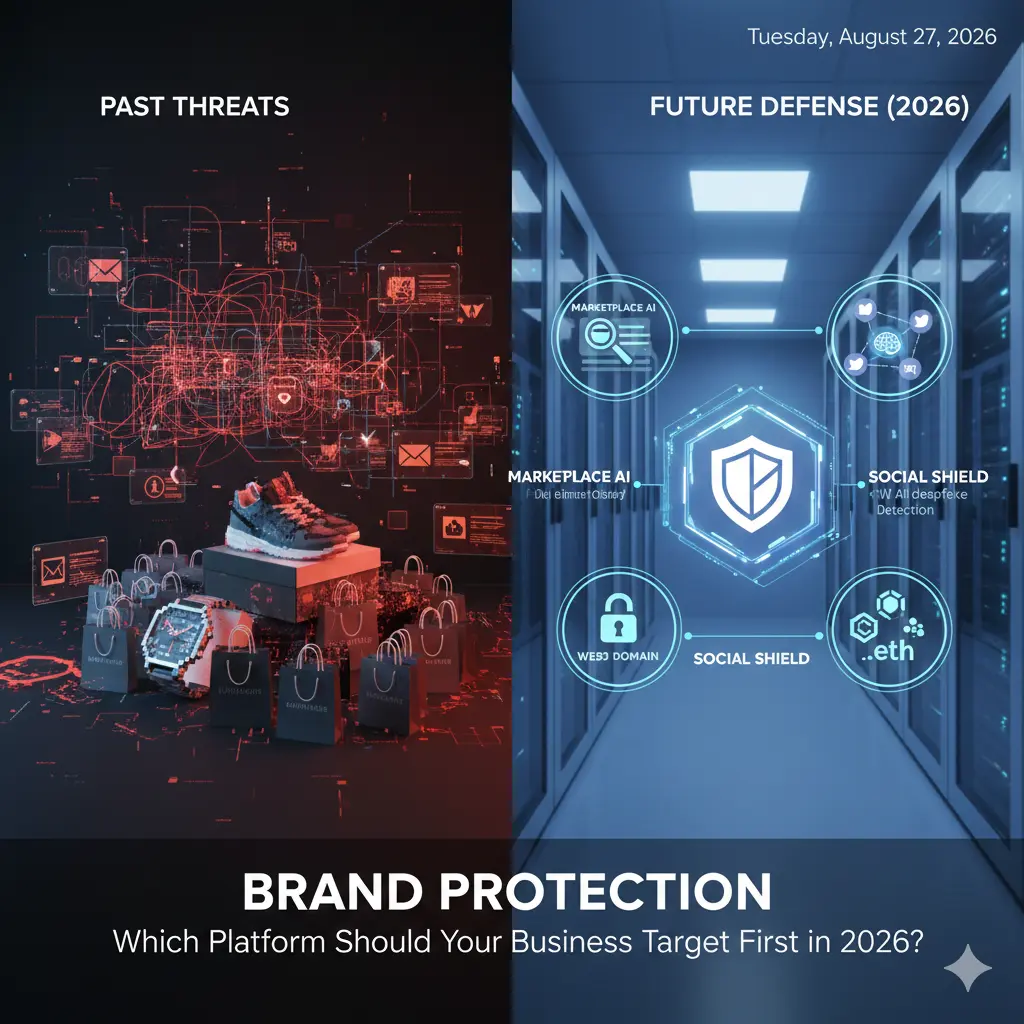

In 2026, a brand is no longer just a logo or a trademark; it is a digital entity living across a fragmented ecosystem of social media, decentralized marketplaces, and AI-generated content. As we navigate this year, the threats to brand integrity have evolved. We are no longer just fighting "counterfeit handbags" on street corners; we are fighting AI-powered deepfake endorsements, domain squatting on Web3 protocols, and algorithmic impersonation.
For business leaders, the cost of inaction is staggering. A single viral deepfake or a sophisticated phishing campaign can erode decades of consumer trust in hours. In 2026, brand protection has transitioned from a legal "afterthought" to a core operational necessity.
The question for your C-suite is no longer if you should invest in protection, but: Which platform should your business target first to secure its reputation in 2026?
Before choosing a platform, we must acknowledge that the "manual takedown" era is over.
The Velocity of Infringement: In 2026, bad actors use generative AI to create thousands of fraudulent landing pages in seconds.
The Rise of Social Commerce: With over 60% of Gen Z and Gen Alpha shopping directly within social apps, the "shoppable fake" has become a multi-billion dollar problem.
The AI Identity Crisis: Scammers now use high-fidelity voice and video cloning to impersonate CEOs or brand ambassadors, leading to "Social Engineering 2.0."
If your business relies on physical products or high-volume e-commerce, your first target must be an automated marketplace monitoring platform.
Red Points has solidified its position in 2026 as the leader in "Self-Healing Brand Protection."
Why target it first? It uses advanced computer vision to scan thousands of marketplaces (Amazon, Alibaba, Shopee, and even niche regional sites) to detect fake listings.
The 2026 Advantage: It features a "Smart Takedown" engine that automatically files removal requests based on pre-set legal logic, achieving a 90% success rate without human intervention.
For global conglomerates, Corsearch offers a more holistic view, combining trademark searching with brand protection. It is particularly strong in identifying the "network" behind the fakes, helping legal teams target the source rather than just the symptoms.
For brands that live on social media or rely heavily on influencer marketing, the threat isn't just a fake product; it’s a fake person or a fake message.
Tracer has become the gold standard in 2026 for AI-Detection and Social Monitoring.
Why target it first? It tracks brand mentions across TikTok, Instagram, and decentralized social networks to find impersonation accounts and "scam-ads" that use your brand's likeness.
The 2026 Advantage: It is one of the few platforms with a dedicated Deepfake Detection Module, flagging synthetic media that uses your executives' faces or voices before it goes viral.
Best For: Lifestyle brands, Financial Services (to prevent phishing), and Entertainment companies.
In 2026, "Digital Real Estate" has expanded. It’s no longer just .com; it’s .eth, .sol, and thousands of new gTLDs (Generic Top-Level Domains).
MarkMonitor remains the "Blue Chip" choice for corporate domain management and perimeter defense.
Why target it first? They specialize in "Defensive Registration" and monitoring "Typosquatting"—where scammers register domains like yourbrnad.com to capture traffic.
The 2026 Advantage: They have integrated Web3 Domain Monitoring, ensuring that your brand name isn't being used as a wallet address or a decentralized website without your permission.
Best For: Fortune 500 companies, Banks, and Tech giants.
Platform | Primary Strength | Best For | Key 2026 Feature |
Red Points | Marketplace Takedowns | E-commerce / Retail | AI Computer Vision for Fakes |
Tracer | Social & Deepfake Detection | Consumer Brands / Finance | Synthetic Media Flagging |
MarkMonitor | Domain & Web3 Security | Enterprise / Corporate | Decentralized Identity Defense |
ZeroFox | External Threat Intel | Cybersecurity Teams | Dark Web Leak Monitoring |
To maximize your chosen platform, implement this proactive framework:
Ensure your official channels (Website, Verified Socials) are clearly communicated to your audience. Use BIMI (Brand Indicators for Message Identification) in your emails so your logo appears in the inbox, proving the email is authentic.
Scammers often hide in the comments of your own posts or use "Shadow Profiles" that don't tag you. Ensure your platform has Sentiment Analysis that flags sudden spikes in negative keywords, which often indicate a brewing scam or a fake news campaign.
In 2026, your customers are your best sensors. Platforms like Sentry allow you to create a "Report a Scam" portal where loyal customers can submit suspicious links directly to your protection platform for analysis.
The "Evolution of Brand Protection" has moved from the courtroom to the server room.
Target Red Points first if: You are losing revenue to counterfeiters on Amazon or international marketplaces.
Target Tracer first if: Your brand’s value is tied to its social reputation and you are worried about AI-generated misinformation.
Target MarkMonitor first if: You are a large institution that needs to secure its global domain footprint across both the traditional web and the emerging Web3.
In 2026, your brand is your most valuable intangible asset. Don't wait for a crisis to build your walls. The most protected brands in 2026 aren't just lucky; they are digitally fortified.
Would you like me to create a "Brand Protection Audit" checklist to help you identify which of these three threats is currently your highest risk?