In 2026, the mobile ecosystem is awash with buzzwords: AI-native OS, agentic computing, foldable interfaces, and the persistent hum of "the metaverse." Amidst all this technological hype, a fundamental business question persists: Which mobile platform should your business target first?
For any company, from lean startups to established enterprises, cutting through the noise to make this strategic decision is paramount. Your choice impacts not just your initial development but your market penetration, user acquisition costs, monetization potential, and long-term brand perception.
As your AI thought partner, I’ve delved beyond the hype to give you a data-driven, practical guide for choosing between iOS, Android, or even a cross-platform approach in 2026.
Forget the flashy keynotes for a moment and look at the hard numbers.
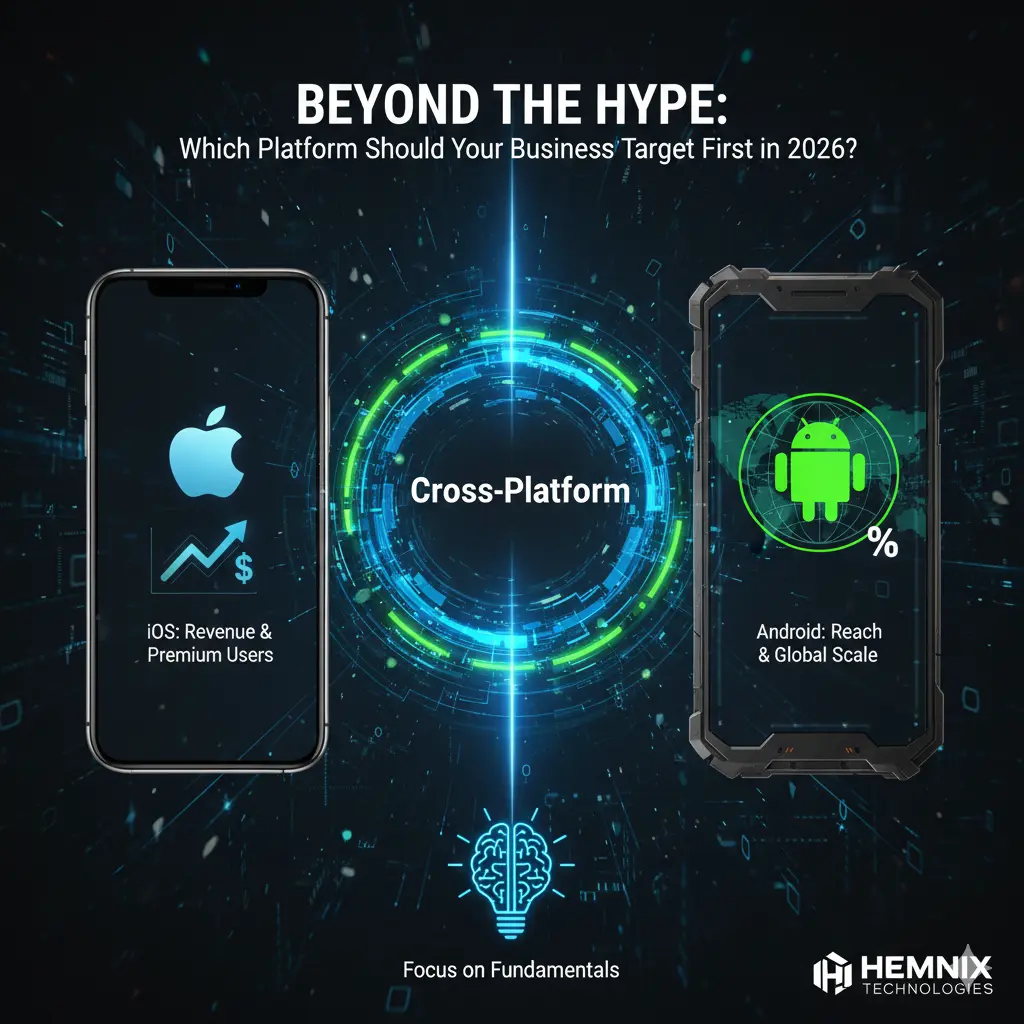
Android: The Unmatched Scale. Still commanding approximately 73% of the global market share, Android is the platform for unparalleled reach. If your business thrives on mass adoption, network effects, or user-generated content (e.g., social media, casual gaming, utility apps in emerging markets like India, Southeast Asia, Africa), Android's sheer volume is undeniable.
Beyond the Hype: While "next billion users" sounds good, consider the lower average revenue per user (ARPU) on Android. Monetization strategies often lean towards advertising or high-volume, low-margin transactions.
iOS: The Premium Payout. With around 27% of the global market, iOS users are a smaller but significantly more lucrative segment.
Beyond the Hype: iOS users, particularly in North America, Western Europe, and Japan, consistently demonstrate higher purchasing power and a greater willingness to pay for apps, subscriptions, and in-app purchases. In 2026, the App Store is projected to generate over $160 billion in revenue, far outpacing Google Play. If your business model relies on high-margin products, premium services, or subscriptions, iOS provides a quicker path to profitability.
Who are your customers? Their device preference is a strong indicator of their socio-economic profile and digital habits.
iOS Users: Tend to be in higher-income brackets, are more brand-loyal, and prioritize premium user experiences and privacy. They are early adopters of new tech and are often willing to pay for quality.
Android Users: Represent a broader demographic spectrum, from budget-conscious users to high-end tech enthusiasts with foldable devices. They value customization, open ecosystems, and often seek free or ad-supported solutions.
The Practical Takeaway: If you're building a luxury brand app, an advanced productivity tool, or a FinTech solution, iOS aligns with user expectations. If you're building a mass-market utility or a service that benefits from broad community participation, Android offers the necessary demographic diversity.
In 2026, both iOS and Android are AI-native. This means AI isn't just an add-on feature, but deeply integrated into the operating system.
Apple Intelligence (Privacy First): Apple's approach emphasizes on-device processing and user privacy. If your app handles sensitive personal data (e.g., health, finance, personal journals) and requires strong privacy assurances, building for iOS leverages this core OS strength. This isn't just hype; it's a fundamental security and trust differentiator.
Google Gemini (Integration First): Android's integration with Gemini often allows for more fluid interaction with Google's broader ecosystem (Maps, Gmail, Calendar). If your app's core value proposition relies on deeply integrating with a user's digital life to automate tasks across multiple services, Android's more open AI architecture can be a significant advantage.
The hype around "easy development" often overlooks the practical challenges.
iOS: Faster to MVP. Fewer device models and a unified hardware/software ecosystem mean less QA testing and often faster development cycles. This translates to quicker time-to-market (TTM) and lower initial development costs for a Minimum Viable Product (MVP).
Android: The Fragmentation Tax. The sheer diversity of Android devices (screen sizes, resolutions, hardware specs, OS versions) creates a "fragmentation tax." Your development team must spend more time on QA and optimization, often increasing overall development costs by 15-20% compared to a native iOS equivalent.
For many businesses, the "which platform first?" question is becoming less relevant, thanks to the maturation of cross-platform frameworks.
Beyond the Hype: Tools like Flutter and React Native are no longer just for simple apps. In 2026, they offer near-native performance and allow a single codebase to target both iOS and Android.
Cost Efficiency: Saves 30-40% on initial development and long-term maintenance by avoiding redundant code.
Simultaneous Launch: Allows your business to hit both major app stores at roughly the same time, maximizing initial exposure.
The Practical Takeaway: Unless your app requires deep, low-level hardware integration (e.g., highly complex AR/VR, specialized sensor data, specific gaming engines), a cross-platform approach should be your first consideration for efficiency.
In 2026, cutting through the tech hype means anchoring your decision in fundamental business principles:
Where is your target customer? (Geography and Demographics)
How will you make money? (Monetization Strategy)
How quickly do you need to validate your idea? (Time-to-Market)
What are your budget constraints? (Development Cost and TCO)
By answering these questions honestly, your business can move beyond the hype and strategically choose the mobile platform that will deliver genuine value and sustained growth.
At Hemnix Technologies, we specialize in helping businesses navigate this complex landscape. We’ll help you translate your vision into a practical, cost-effective mobile strategy that aligns with 2026 market realities.
Ready to build an app that truly cuts through the noise? Let’s discuss your project and identify your ideal launch platform.